2024 Fairbanks 3DCP Demonstration
In 2024, Xtreme Habitats Institute (XHI) and our project team completed a critical step toward scalable, cold-climate automated construction: a 3D concrete printing (3DCP) demonstration in Fairbanks, Alaska. The purpose of the Fairbanks effort was straightforward and practical—prove that mobile 3DCP can be mobilized and executed in Alaska conditions, train an Alaska-based workforce to operate the system, and establish a real-world data platform to evaluate performance through winter conditions.
This work was intentionally structured as a learning and risk-reduction milestone. Rather than moving directly into the most logistically challenging environments, the project used Fairbanks to validate workflow, materials handling, printing operations, and measurement strategy in a controlled but still demanding subarctic setting. The result is a stronger technical foundation—and a more resilient operational approach—for future deployments.
Why Fairbanks
Fairbanks offered a unique combination of conditions that made it the right proving ground for a 2024 field demonstration:
- A practical environment for field execution. The site and local logistics support mobilization, commissioning, and troubleshooting, all of which are critical for a first-of-its-kind field demonstration cycle.
- A meaningful cold-climate testbed. Fairbanks provides the seasonal conditions needed to evaluate winter performance and refine details based on how printed structures behave over time.
Proximity to technical capacity. Access to university and building-science expertise, combined with an Alaska-based supply and logistics context, supports rigorous validation—not just construction.
XHI’s Role and How the Team Worked
XHI served as the coordinating organization—aligning site readiness, field execution planning, partner collaboration, and the overall demonstration pathway. Our emphasis throughout the project was integration: ensuring that jobsite activities were not isolated from measurement, documentation, and downstream design decisions.
This meant coordinating multiple workstreams at once: field planning, workforce readiness, equipment mobilization, printable materials planning, and instrumentation strategy. The objective was a credible field demonstration that generates usable outcomes for the next steps—not simply a successful print day.
What We Did in 2024
The Fairbanks demonstration followed a field-tested sequence designed to reduce risk and produce measurable results.
1) Site selection and readiness
The team secured a Fairbanks demonstration location at a local precast facility and confirmed suitability for a slab-on-grade approach for the simplified printed structure. This provided a stable platform for printing operations and allowed the team to focus on validating printing parameters, jobsite workflow, and quality considerations.
2) Mobilization of the mobile 3DCP system
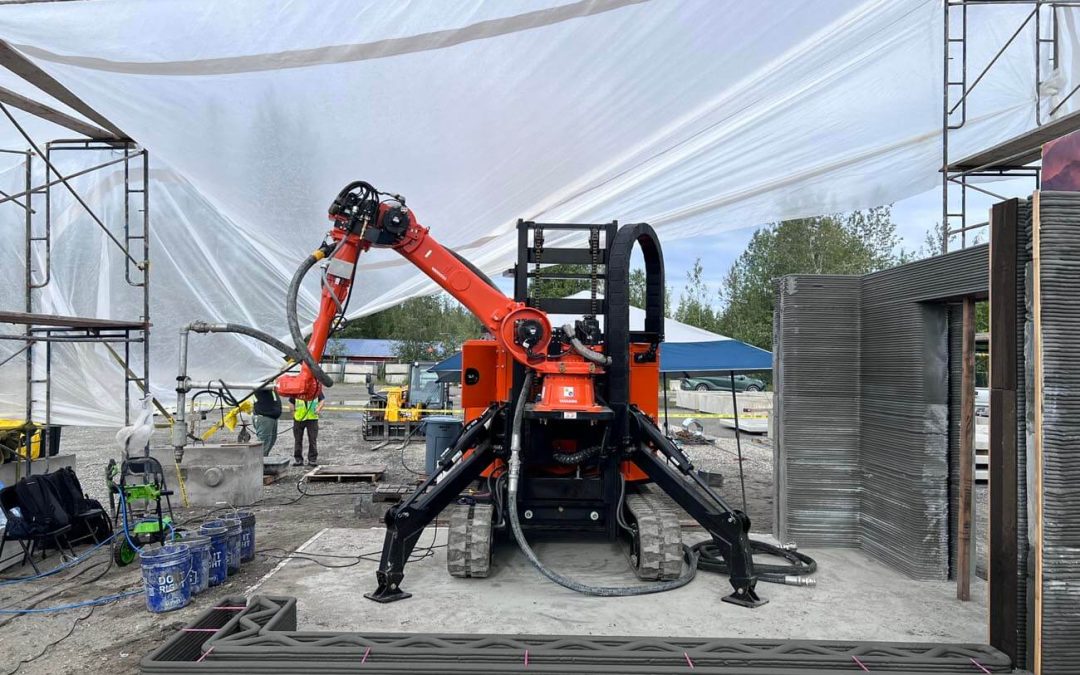
A key milestone occurred on July 22, 2024, when the mobile 3D concrete printing system and accessories arrived in Fairbanks. Mobilization is often where advanced construction concepts meet reality: transport, staging, setup, calibration, materials management, power and safety planning, and the constraints of an active worksite. This arrival marked the transition from planning to field execution.
3) Workforce development and operator training
Workforce development was not a side benefit; it was a core outcome. XHI and partners engaged OPCMIA Local 528 as the operating workforce for the demonstration. Training began immediately after equipment arrival, focusing on practical operator readiness: system setup, calibration, jobsite safety, materials handling, and execution of the print plan under real-world conditions.
The training model paired local operators with experienced technical oversight, accelerating skill transfer while maintaining execution discipline. This approach builds Alaska capacity while ensuring the demonstration remains repeatable and measurable.
4) Printing the demonstration structure
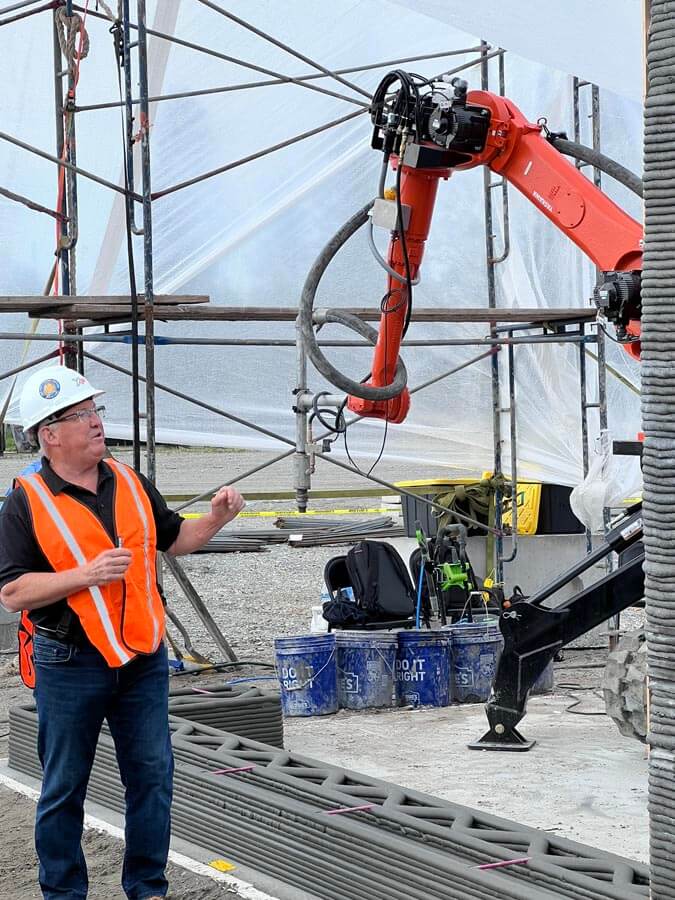
Following training, the team printed the Fairbanks test structure through a coordinated local-operator + technical-support model. The print was executed to validate field workflow, system reliability, materials performance in an Alaska environment, and build sequence decisions that will matter for future deployments.
A major project emphasis during this stage was capturing actionable learning—not only what worked, but what should be improved: staging, sequencing, timing, materials handling, and practical constraints that affect quality, schedule, and safety.
5) Instrumentation and winter monitoring
A printed structure becomes truly valuable when it is measured. After printing, the structure was outfitted with sensors and placed into a monitoring plan designed to collect data through winter conditions. The intent of instrumentation is to evaluate how the structure behaves over time in a cold-climate environment and to inform refinements where needed.
This step is crucial for moving from “proof of printing” to “proof of performance.” Performance data supports decision-making on details that matter in Alaska: thermal behavior, durability considerations, and design or process changes that can reduce cost and increase resilience.
What the Fairbanks demonstration delivered
By the end of the 2024 demonstration period, the project achieved several tangible outcomes:
- Field-proven mobilization of a mobile 3DCP system in Alaska, including setup and execution on a live site.
- Local workforce capability building through hands-on operator training and participation in printing execution.
- Successful print execution of a demonstration structure, providing a real artifact for measurement and learning.
- A performance measurement platform created through sensor installation and winter-season monitoring readiness.
- A disciplined learning loop that captures lessons learned and translates them into improved planning and design decisions for future phases.
Why this matters for Alaska
Alaska communities face constraints that drive housing and infrastructure costs: short building seasons, limited labor availability, difficult logistics, and extreme weather exposure. Automated construction methods are not a silver bullet, but they can become a powerful tool when they are validated responsibly, executed safely, and adapted to local conditions.
The Fairbanks demonstration contributes to a long-term objective: building an Alaska-relevant pathway for advanced construction that strengthens local workforce capability, improves resilience, and expands options for communities that have historically faced limited choices.
Gallery
Tap to enlarge

Crowd of Demo Attendees

Keith Comstock addressing demo attendees

Fairbanks Demo Print
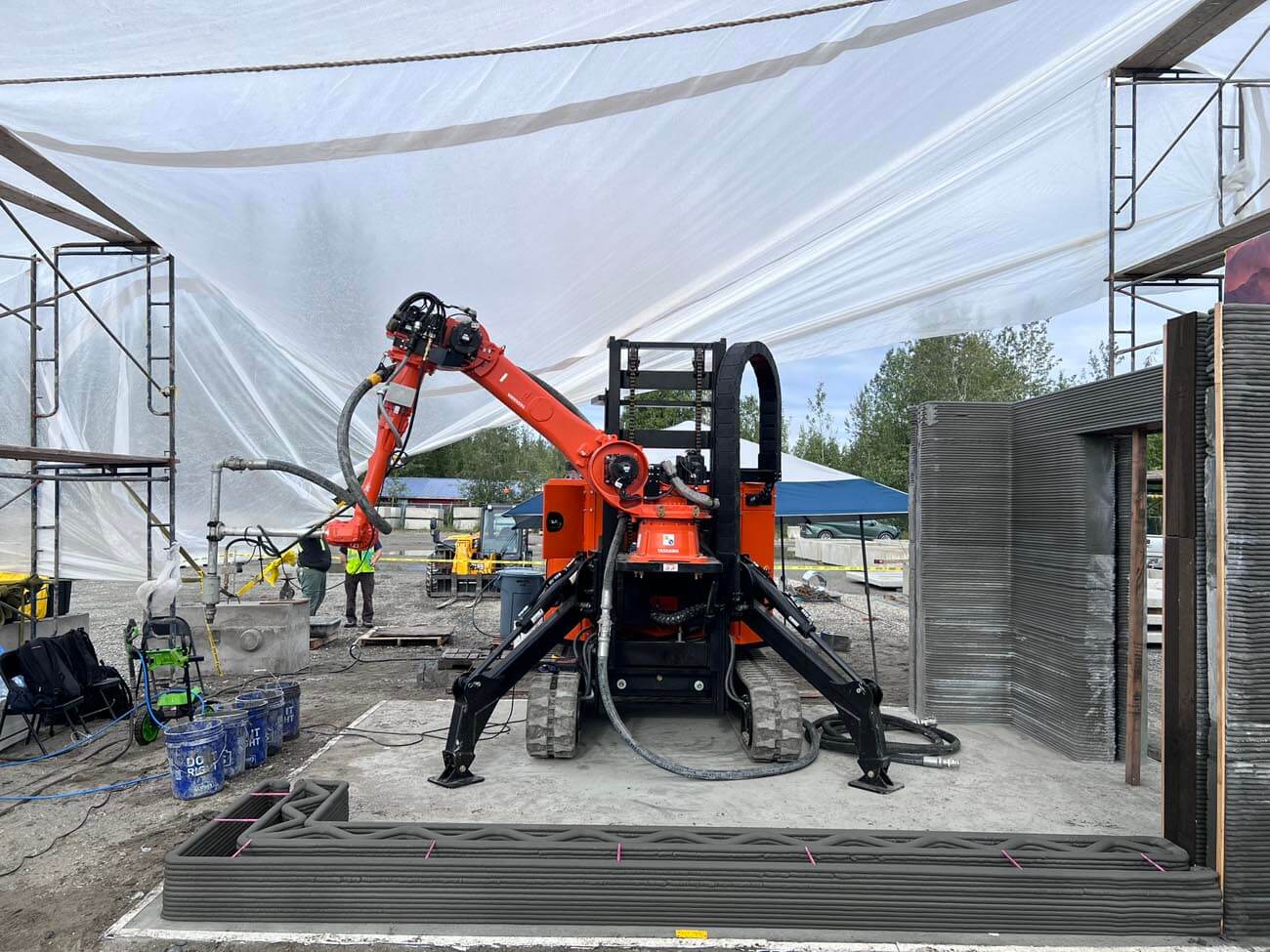
Demo wall looking dowm

Finishing the demo wall print.
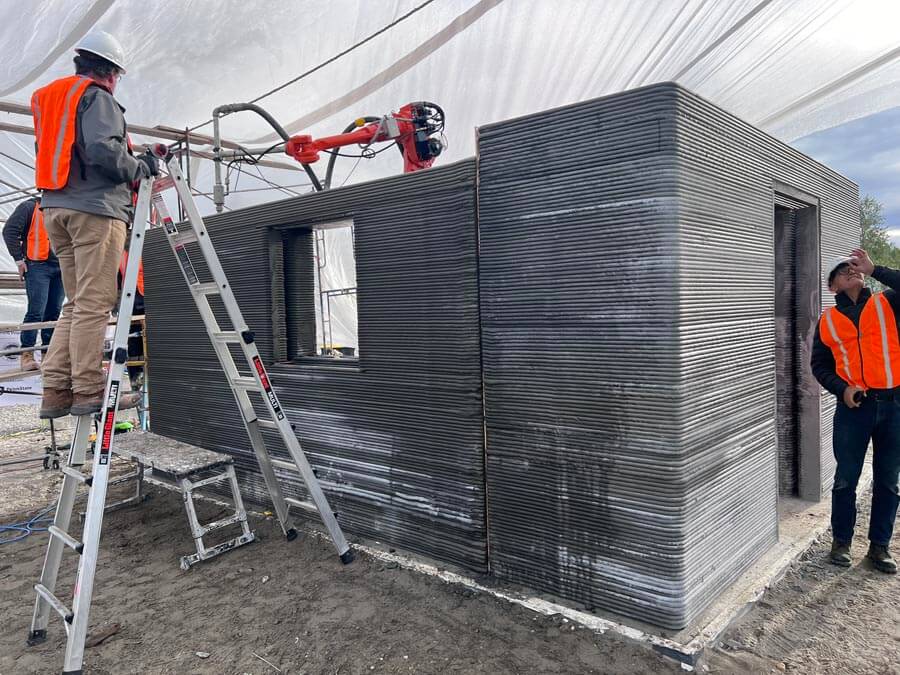
The UAF research team
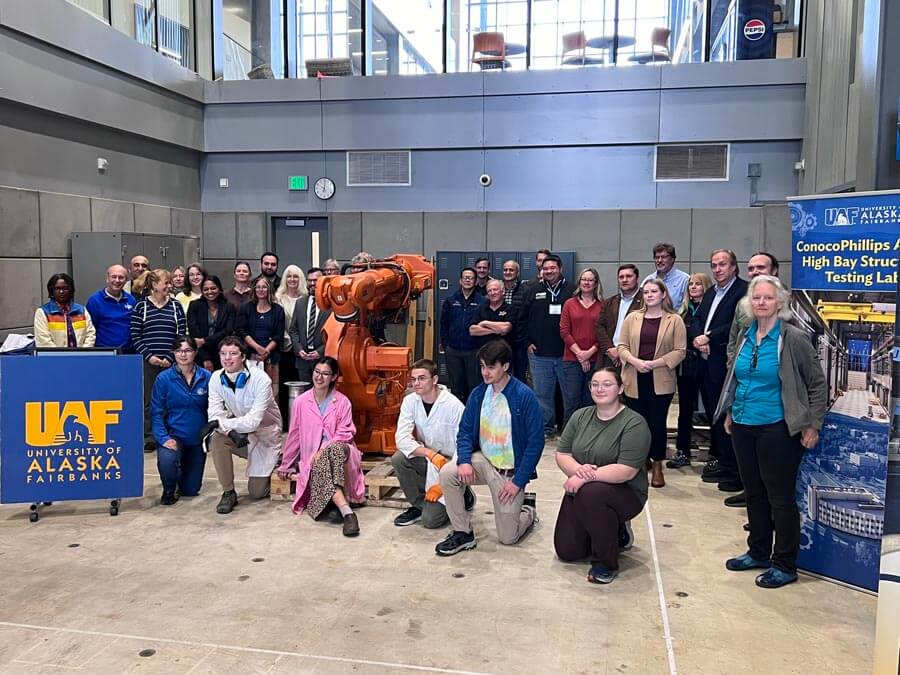
UAF receives printer from XHI
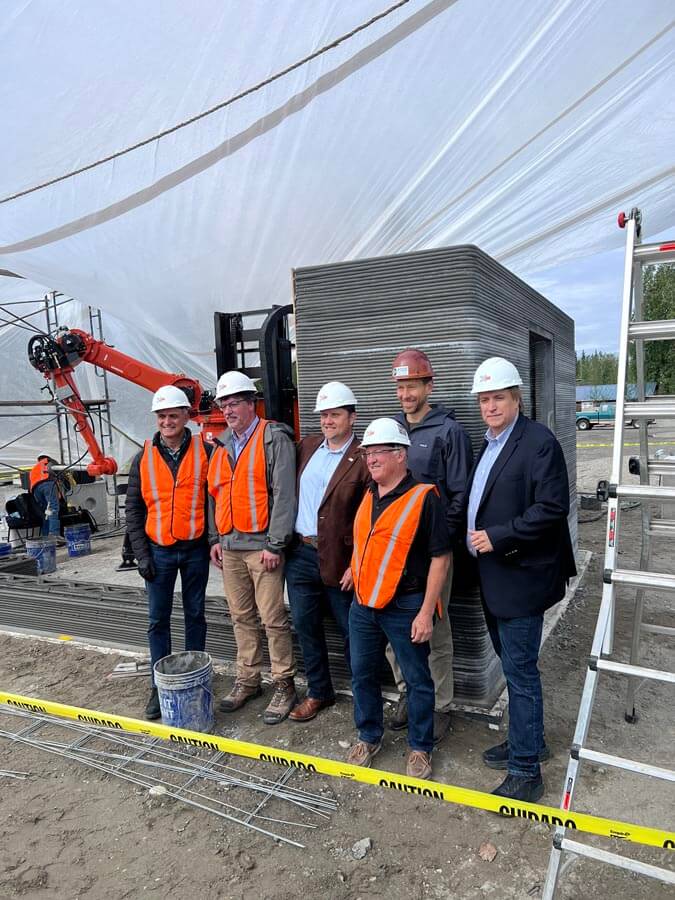
Demonstration equipment operators and executives
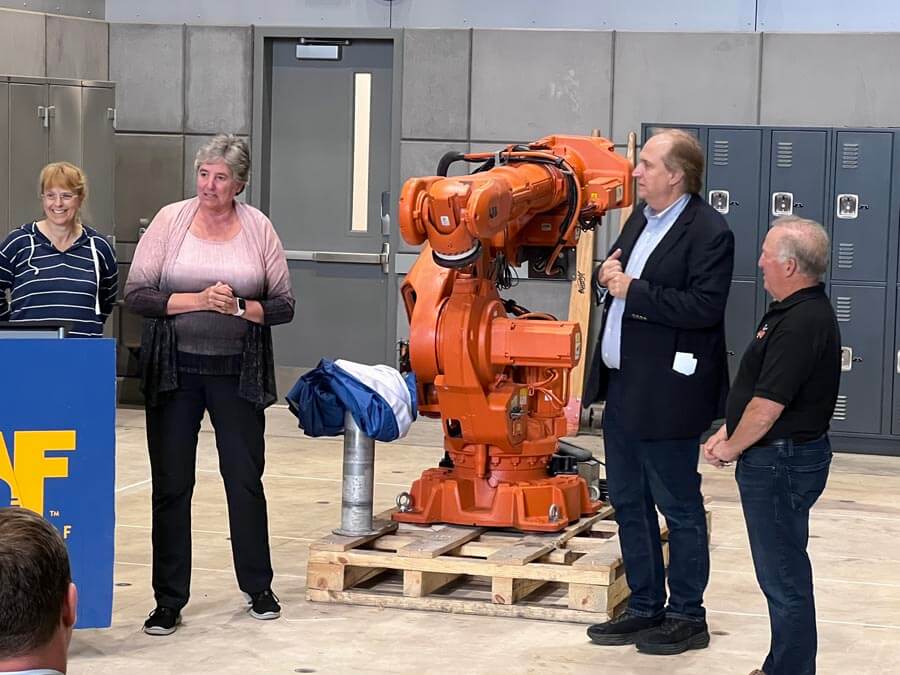
Bruce Kraselsky explains about the printing process